
The polls were wrong.
Abelardo de la Espriella won the first round in Colombia yesterday with 43.7 percent of the vote. Iván Cepeda came in second at 40.9 percent. The two will face each other in a runoff on June 21.  What the polls had predicted as a Cepeda lead of roughly fifteen points turned out to be a de la Espriella margin of nearly three.
Paloma Valencia, the Uribista candidate who had polled consistently around 25 percent, collapsed to under 7. The liberal center candidates, Sergio Fajardo and Claudia López, received 4 and 1 percent respectively.  The political center did not just lose. It nearly ceased to exist as an electoral force. Those votes are small in total, but in a runoff decided by three points, small is everything. Valencia has already endorsed de la Espriella, which means the Uribista machinery — the networks, the local bosses, the institutional muscle that Uribe spent two decades building — now moves in his direction.
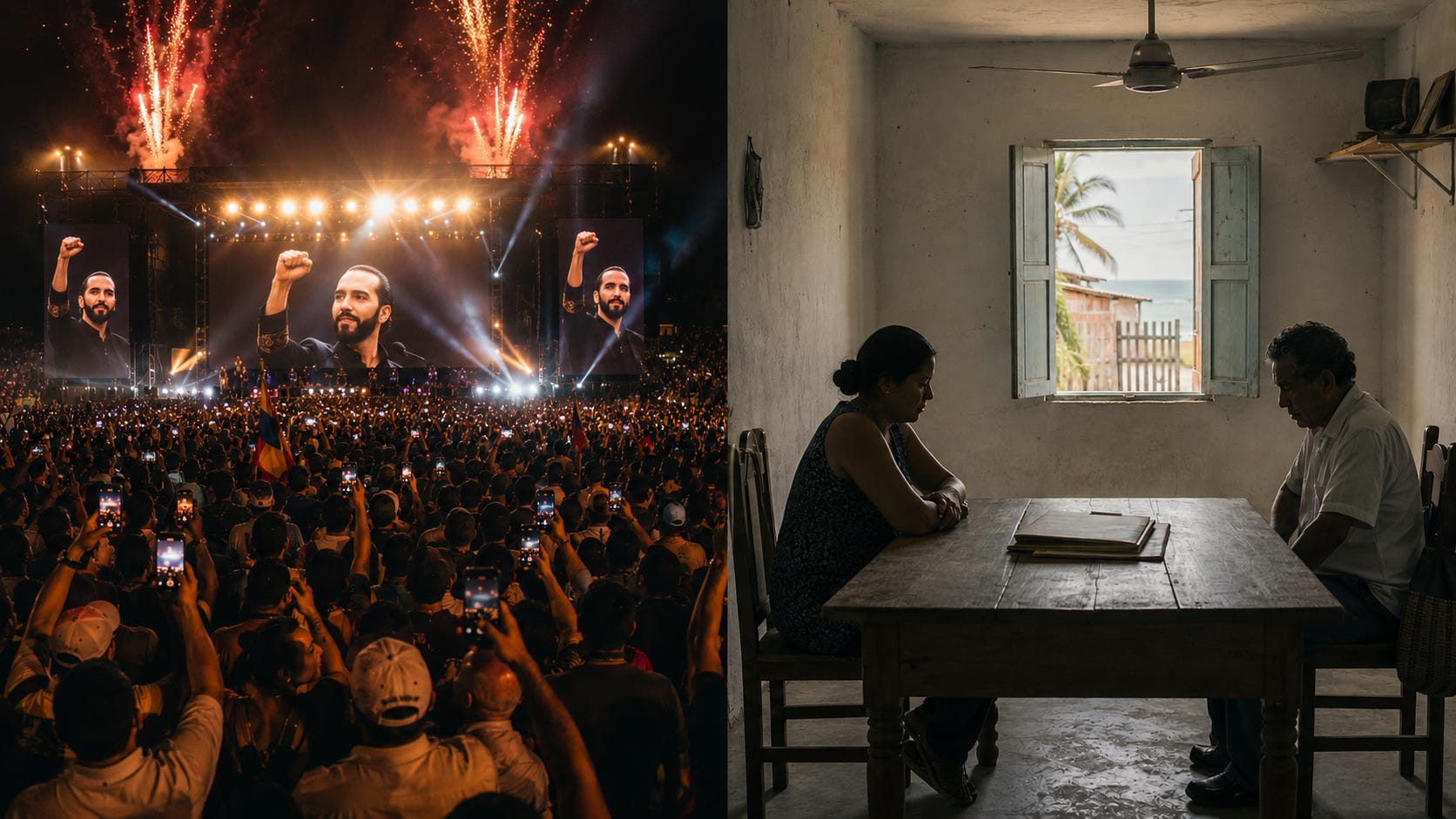
I pause to think of where he came from. De la Espriella polled at just 1.1 percent in March 2025. By November he had climbed to 14 percent.  Yesterday he won the first round. That trajectory is not a polling error. It is a signal about what Colombian voters wanted, and what they were willing to overlook to get it.
He is a combative criminal lawyer who flaunts his wealth and machismo and stars in his own music videos.  His speeches rely on short, forceful, often controversial phrases that spread as viral videos — aimed not at analysis but at directly blaming “the other” as the cause of society’s problems.  The night before the vote, he made a final campaign appearance on a livestream hosted by influencer Westcol on the platform Kick, watched by hundreds of thousands of viewers, which became one of the most talked-about political moments of the campaign’s closing hours.  Not a debate. Not a policy forum. A streaming event.
Cepeda ran a different kind of campaign — substantive, dense with policy argument, rooted in the legislative work he has done for decades on human rights, on the false positives, on transitional justice. It was a campaign built for readers, for people who follow hearings, for the Colombia that exists in university lecture halls and NGO offices. That Colombia showed up, too, but it was not enough.
De la Espriella’s events blended religious invocation, pyrotechnics, and a tight circle of social-media influencers who traveled with him.  He called himself the candidate of “los nunca” — the never-voters, the abstentionists, the fed up. Yesterday, the fed up showed up in numbers no poll had captured.
What this means for the JEP, for the families in Toluviejo who waited years for someone to confirm that their sons were not guerrillas — that is now uncertain in ways it was not two days ago. De la Espriella has treated the Special Jurisdiction for Peace as an obstacle. A president who views transitional justice as persecution cannot easily dismantle a tribunal protected by the 2016 peace framework and international agreements, but he can starve it, discredit it publicly, and refuse to make it function. Building on the Trump playbook, he can dismantle it anyway, and wait for the courts to catch up.
Cepeda (and president Petro) declined to accept the preliminary results on election night, citing reports of atypical voting patterns at an undetermined number of polling stations. “We will not hand Colombia over to fascism,” he told supporters.  Electoral authorities stated that the day had proceeded normally. Whether the irregularities Cepeda’s team is flagging amount to anything legally remains to be seen.
Three weeks remain. De la Espriella starts the runoff with momentum, a three-point lead, and the Uribista machine now behind him. The center’s orphaned voters will decide this, if they decide at all.
The house in Toluviejo will still be there on June 22, whoever wins. The testimony inside it has already been given. The question is whether the next government treats that testimony as the foundation of something, or as a problem to be managed into silence.
The conflict at the center of this election is also at the center of my novel. The false positives. The families. The house where the truth has to be spoken out loud.
→ Those Who Stayed:
Los que se Quedaron: mybook.to/LosQueSeQuedaron
This is an update to my earlier post, Colombia Votes at the End of the Month. The War Isn’t Finished.