
We picked blueberries last week and I wanted to call my dad. A few nights later the moon came up full and I wanted to call him about that too.
Grief does not happen at the memorial or going through his papers. It happens in a field with a bucket in my hand. He liked hearing about ordinary days. He would have asked what kind of blueberries.
He was also my most avid reader. He read all my books, or nearly all of them, in both languages. He could not remember one of them.
He would ask what I was working on and I would tell him. He was proud the way fathers are proud, mostly of me and not much of the book. A week later he would ask again, and I would tell him again, and he was proud again, brand new.
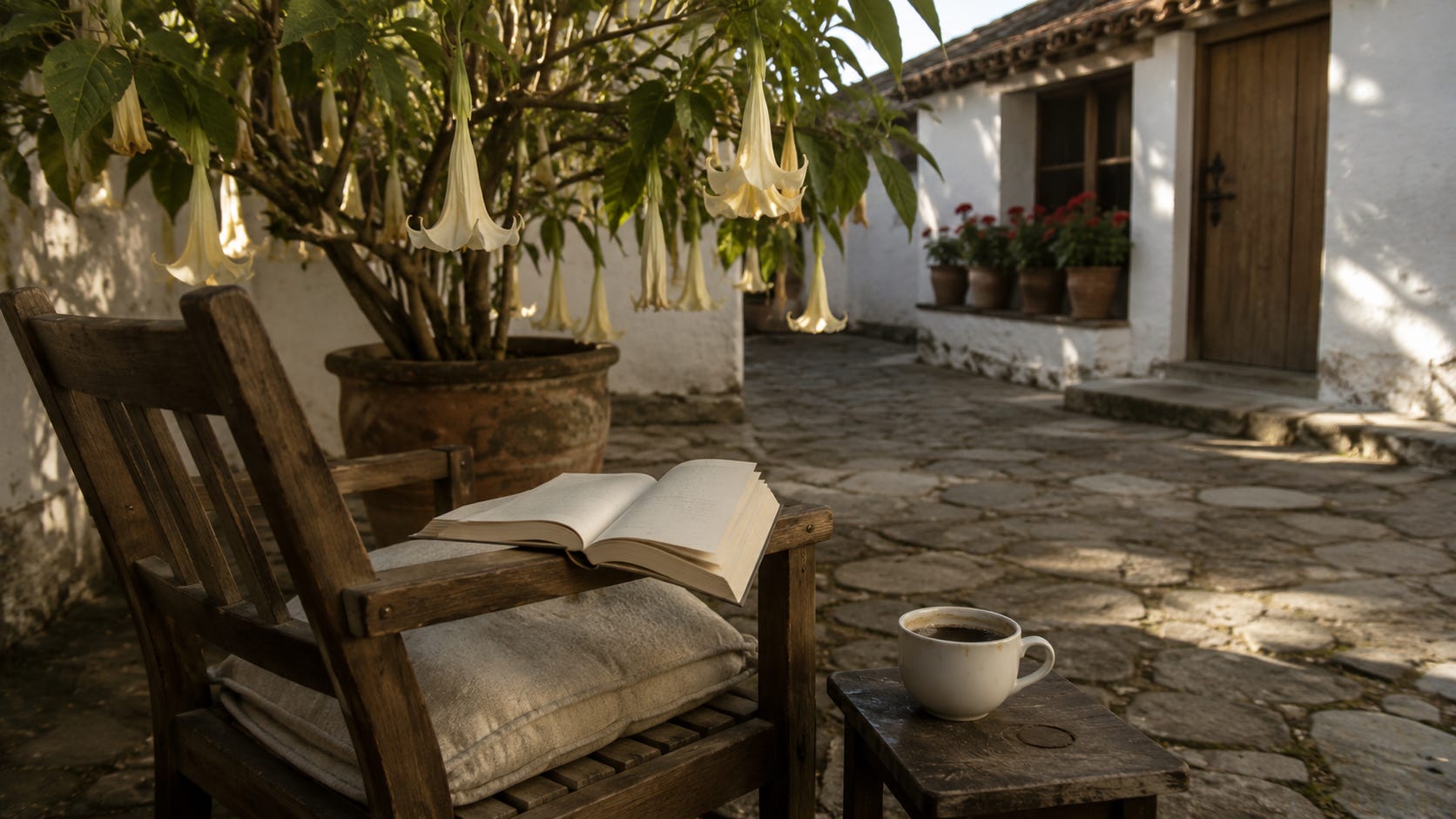
Earlier this year I wrote a novel called Lucid Interval. The main character is Nicolás, a retired mining engineer with dementia, living alone in a colonial house in Villa de Leyva, talking every day to a wife who has died. He is a projection of my father. On the first page he sits down in his courtyard and opens a book.
The book is Under the Borrachero Tree. My novel about our family.
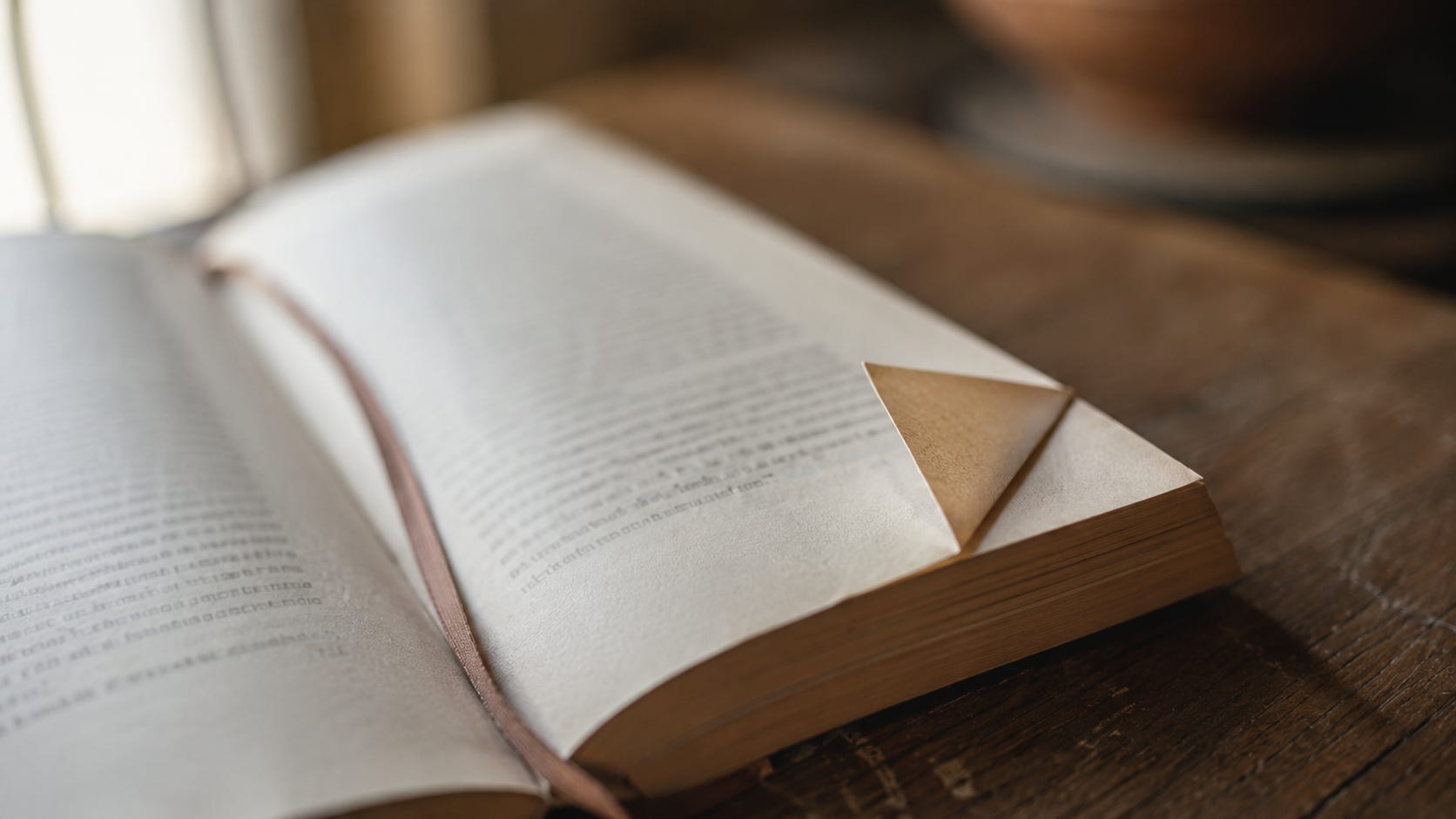
Nicolás has read it before, or thinks he has. There is a page with the corner folded down and he turns to it, though he cannot say whether that is where he stopped. He does not remember folding it.
Then he reads out loud to nobody, because he always read out loud to his wife while she worked at the table behind him. She is not there. I wrote that he reads aloud now because the habit is older than the reason for it.
He gets to a chapter about a young engineer who went to Canada to learn something his country needed and came home to use it. He feels he has met the man somewhere. A few pages later he notices a description of a woman’s handwriting, small and precise, the ledgers like sheet music, and he stops, because he knows that handwriting. He reads the passage again. He cannot say where the valley is. Only that he has stood in that light.
He is reading his own life and cannot place it.
Later his daughter picks the book up off the desk and sees that the marker has not moved in three days. Same chapter. He has told her twice on the phone about the engineer who went back to Colombia. She lets it go. I wrote her deciding against correcting him, because what she wanted was to hear him tell it, and she could hear it twice.
I made all of that up. But it was also a reflection of my conversations with my father.
I wrote Under the Borrachero Tree because of a scene in the middle of it. A son stands at his father’s funeral and works out that he never wrote any of the old man’s stories down. The jokes, the way he told them, all of it going into the ground with him. I read that back in my own manuscript as an instruction. Get it down. Put the family in a book so it holds.
That novel ends by running the clock forward past all of us, one year, five, ten, fifty, a hundred, until nobody alive has heard of any of these people. Then it says: it is in living, not in being remembered, that our lives gain their true worth.
My father read a page and it gave him an hour. He was in his chair with his own voice doing what it had done his whole life. The page did not stay. The hour was still an hour.
When my oldest daughter said goodbye to him after the birthday party, he told her: see you in our memories. That from the man who could not keep one.
So I will keep writing them down. I do not think it is for him. I would just like to tell him about the blueberries.
Lucid Interval · English → https://mybook.to/LucidInterval Intervalo Lúcido · Español → https://mybook.to/IntervaloLucido
Under the Borrachero Tree · English → https://mybook.to/UnderBorrachero Bajo el Borrachero · Español → https://mybook.to/BajoElBorrachero
The short film for Lucid Interval, if you want to see the house and the tree:
And for Under the Borrachero Tree: